

… they said
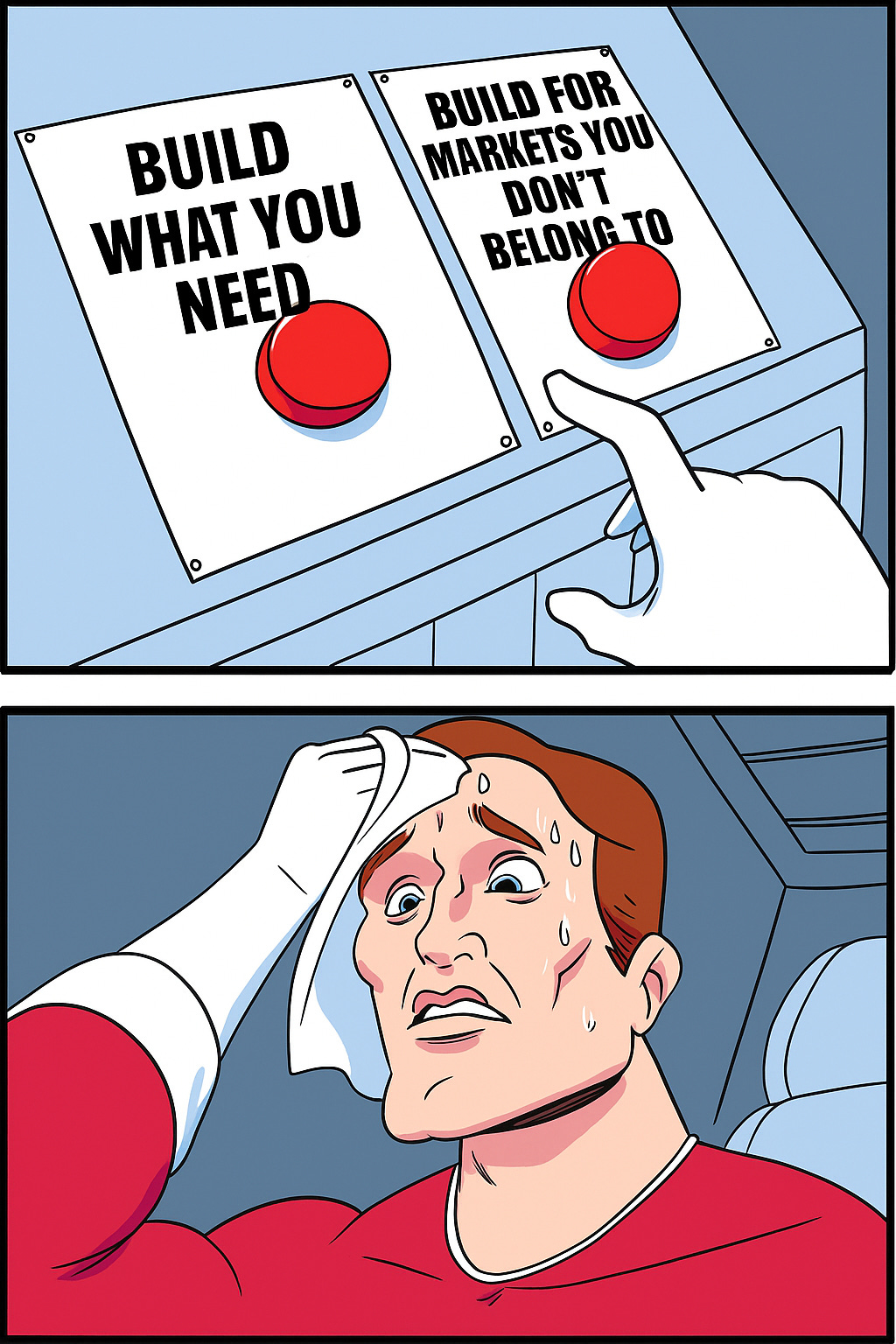
Build what you need. Scratch your own itch.
But should I, though?
For a long time, I believed the easiest way to build products was simple: be your own user and solve your own problem. The logic was clear. You face problems in your daily life, and if you have the ability, why not solve them? When you’re building for yourself, you feel the pain points deeply.
You can trust your instincts.
You don’t need endless discovery cycles because your own experience could become the compass.
The vision is clearer
and you’re even more passionate about the product
But lately, I’ve found myself drawn to the opposite challenge: building products for markets that I don’t represent. When I’m not the user, I can’t pretend to know. I can’t rely on my gut. I can’t assume. I can’t shortcut the process. Instead, I’m forced to create systems that bring me closer to reality and unbiased success.
And, crucially, I stop trying to prove myself right and instead work to prove myself wrong.
I believe this shift makes you a stronger builder and helps sharpen your global skills beyond leveraging your lived experience.
A Story from the field
A couple of years ago, I was working at eHealth Systems on a product for a customer segment I knew very little about. The users were frontline healthcare workers delivering services to vulnerable and underserved communities across Northern Nigeria, Chad, Cameroon, and Niger.
Some of these users commuted for days in boats and buses, while others slept in open fields, all while relying on the software my team built, along with hand-drawn maps, to complete their jobs. Their daily routines, tools, and even vocabulary were completely different from my lived or told experience.

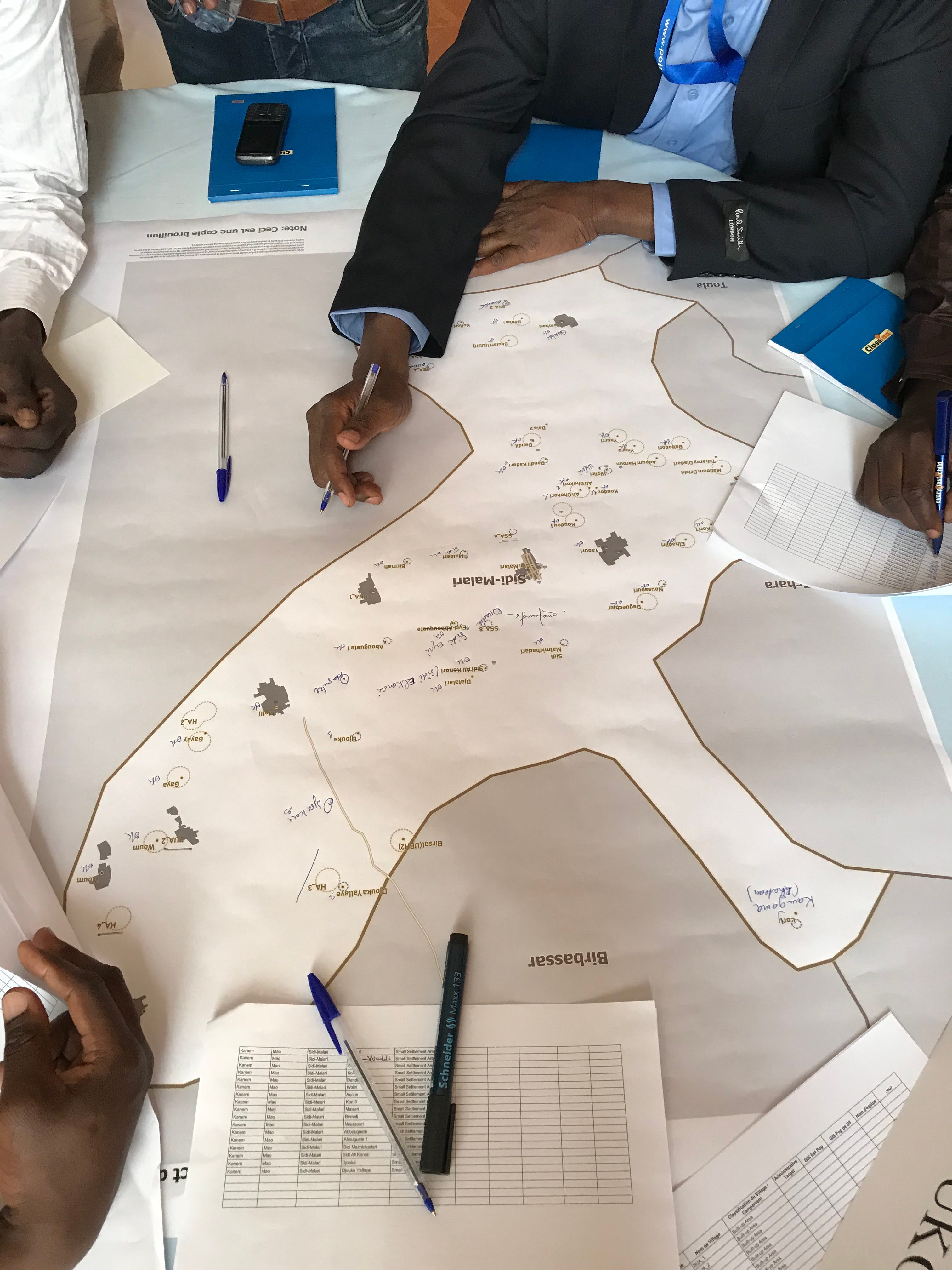
My first instinct was to translate their world into mine: “If I were them, I would want it this way.” Each time I thought I had a good idea, sitting with actual users proved me wrong. They revealed realities and workarounds I never could have imagined. They highlighted pain points I had overlooked or dismissed as simple, only to learn they were anything but.
At first, the experience was deeply frustrating. Over time, however, I found it liberating, especially when I traveled to see firsthand how my users lived and worked. (Spoiler: I couldn’t survive for a month in their shoes without running back to the life I was familiar with).
That’s when it clicked: my job was not to be right. My job was to solve the right problems the right way for the people who lived the problems every day.
The greater the distance I felt from the market, the more committed I became to closing that gap and staying close to the user.
The trap of building for yourself
Let’s start with the seemingly “easy” side. When you are the user, you get the benefit of empathy and intuition. You know what “good” feels like. You can dogfood your product daily.
But some risks often go unspoken:
You are a sample size of one - your use case may not match the broader market.
You may over-index on personal preference - what delights you may confuse others.
You can stop listening because you assume you already know.
If you are building for yourself, here are three ways to keep perspective:
Actively seek the “non-you” users. Identify where their needs diverge from yours, and prioritize those insights.
Don’t rely on dogfooding alone. It’s valuable, but it can create blind spots. Prioritize external discovery and research.
Check your ego. Being the user doesn’t mean you’re the average user. Keep reminding yourself of that.
The discipline of building for others
Now, the harder side: building for markets you don’t belong to.
Here, you don’t have the luxury of instinct. And that can feel uncomfortable until you realize it’s actually an advantage.
Why? Because it forces you to build better product muscles:
Humility. You accept you don’t know, and let the user’s behavior guide you.
Curiosity. You spend more time listening, observing, and asking the right questions in the right way (Refer to Teressa Torres on all the ways to ask product questions)
Proximity. You stay closer to your users and partners because you have no other choice.
If you are building for a market you’re not part of, here are three practices that help:
Aim to prove yourself wrong. Go into research not to validate ideas, but to find their cracks and find the best patterns
Borrow perspectives. Hire, partner, or consult with people who represent the market. This not only enriches your product but also your personal network
Stay in the field. Replace assumptions with first-hand observation. Shadow, test, iterate.
The irony is that, by being outside the market, you often end up closer to the user than if you were inside it.
The juxtaposition
So here’s the paradox I’ve come to believe:
When you are the user, the risk is overconfidence.
When you are not the user, the risk is ignorance.
Both are dangerous, but only one leaves you with no choice but curiosity, humility, and discipline, or else you don’t survive. That’s why, increasingly, I find myself preferring the latter.
And maybe that’s the real takeaway:
It’s less about whether you are the user or not.
It’s about how you choose to approach the work.
👉 I’d love to hear from you:
Have you found yourself preferring one side or the other?
What habits keep you from falling into the traps of your own perspective?