

User needs are the expectations and desires users have when interacting with a product. These needs can be functional (what the product does), aesthetic (how it looks and feels), or emotional (how it makes users feel).
Understanding users’ needs is the foundation of any meaningful product research. One step to arriving at user needs, though, is to segment users into groups based on shared characteristics or behaviours, to better understand their needs and target them.
For example, the Strong workout app could segment its users into psychographic segmentation of Lifestyle, values, interests, and personality
Segment 1 - athletes
Segment 2 - weight-loss seekers
Segment 3 - mindfulness enthusiasts
One way to view functional needs by Segment
Segment 1 – Athletes
Advanced workout logging (sets, reps, weights)
Progress tracking (graphs, PRs)
Custom workout plans
Data export and app integrations
Segment 2 – Weight-Loss Seekers
Guided, beginner-friendly workouts
Calorie/macro tracking or integrations
Weight and progress photo logs
Workout reminders
Segment 3 – Mindfulness Enthusiasts
Workout journaling (mood, notes)
Mindful rest timers or prompts
Gentle routines (yoga, mobility)
Integration with wellness apps
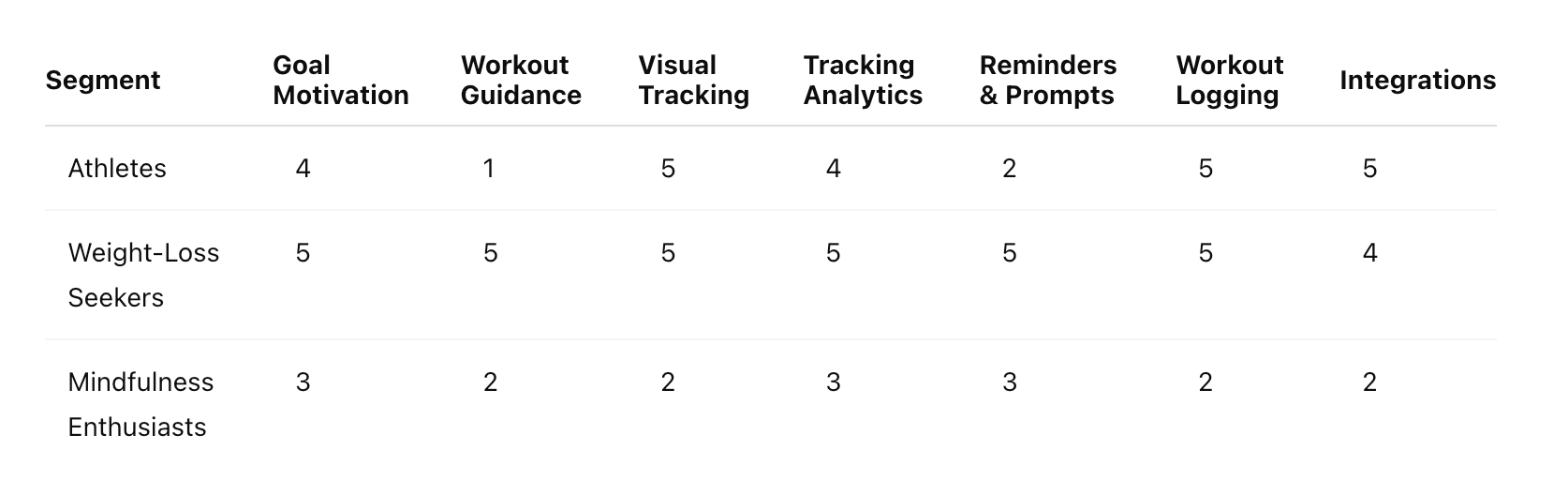
Another way to view user needs as a spectrum, not binary
I’ve learned that user needs don’t simply fall into strict buckets. Instead, they exist on a spectrum:
All segments need workouts, but the intensity and type vary.
All segments need workout logging, but the timing and frequency may vary.
All segments want tracking, but the focus and depth of tracking differ.
What does this mean for product development?
Segment thoughtfully, but also consider the spectrum within and across segments for richer insights.
Step back into the user journey to categorize user needs into clear themes that are common across the board, but vary in intensity and timing
Avoid one-size-fits-all assumptions. User needs often overlap but differ in degree and nuance.
Prioritize based on impact: Focus first on the most critical needs per segment, then explore cross-segment commonalities.